REVIEW · HO CHI MINH CITY
Ho Chi Minh: Authentic boat trip – Cai Rang Floating Market
Book on GetYourGuide →Operated by FME travel · Bookable on GetYourGuide
That 2:30 a.m. start pays off. This Cái Răng boat trip turns Ho Chi Minh City’s early darkness into a Mekong morning, with sunrise views, breakfast on the water, and community-focused stops across Cần Thơ. You’ll be transferred by road, then by sampan, moving from the big floating market into smaller canals where daily life looks far less staged.
I love the Mekong sunrise moment, when the river feels calm instead of crowded. I also like the hands-on food story: you visit a family rice noodle house and see cacao being grown and turned into something you can drink as fresh cacao milk.
One consideration: it’s a very early pickup, and the day is long, so you’ll want to be comfortable with early mornings and some walking plus time on boats.
In This Review
- Key highlights you’ll feel right away
- Why Cái Răng at sunrise feels different
- Getting from Ho Chi Minh City: bus vs private car
- Sunrise cruising and the river breakfast moment
- On-the-water walking: how you move through the market
- Traditional rice noodle making at a family Lò hủ tiếu house
- Gliding into smaller canals by paddle
- Village walk: seeing daily life without the show
- Cacao farm visit and the real taste of cacao milk
- Timing, tides, and why the day can run a bit flexible
- Price and value: what $85 really buys you
- Who should book this tour—and who should skip it
- What to bring so the morning stays pleasant
- FAQ
- What time is the pickup from Ho Chi Minh City?
- How do I get there if I choose the bus option?
- Is the breakfast vegetarian-friendly?
- What parts of the trip are on boats?
- What food experiences are included besides the floating market breakfast?
- Is the tour suitable for wheelchair users or back problems?
- How long is the tour?
- Can I request a French-speaking guide?
- Should you book this Cai Rang floating market boat trip?
Key highlights you’ll feel right away
- Sunrise on the Mekong before most people are even awake in Ho Chi Minh City
- Breakfast on a boat at the market, with fresh fruit and veg-friendly options
- A real, family-run rice noodle house where you learn traditional techniques (not a showroom)
- Quiet canal time by paddle where you can hear nature and spot local trees like coconut and water palms
- A walk to a cacao farm with a simple explanation from the artisan and a glass of cacao milk
- A route designed around local businesses and a community project, with you seeing that support at each stop
Why Cái Răng at sunrise feels different
Cái Răng Floating Market is famous, but timing changes the whole vibe. Going in the early window—when you’re arriving around 6:15 a.m.—means you catch the market when boats are moving with purpose, but the atmosphere is still soft and not fully chaotic.
You’ll also get river time twice: a sunrise view on the Mekong before you even reach the market, and then more cruising later as you move between stops. It’s one of the better ways to understand the Mekong as a working river, not just a photo backdrop.
You can also read our reviews of more tours and experiences in Ho Chi Minh City.
Getting from Ho Chi Minh City: bus vs private car
This trip runs from Ho Chi Minh City with a very early departure at 2:30 a.m. You can choose a private car for direct pickup, or take the bus option where you handle the taxi to the station and the team meets you there.
The practical difference is comfort and control. A private car tends to be easier if you want a smoother start, especially when the day begins in the dark. The bus option can still work well because you’re not forced to navigate alone—staff support you once you get to the right place.
Also note the pickup coverage: you can be picked up from multiple points in and around District 1 / District 3 / the west side (and a few named hotels). If you’re staying outside the city center, the operator asks you to contact them in advance.
Sunrise cruising and the river breakfast moment
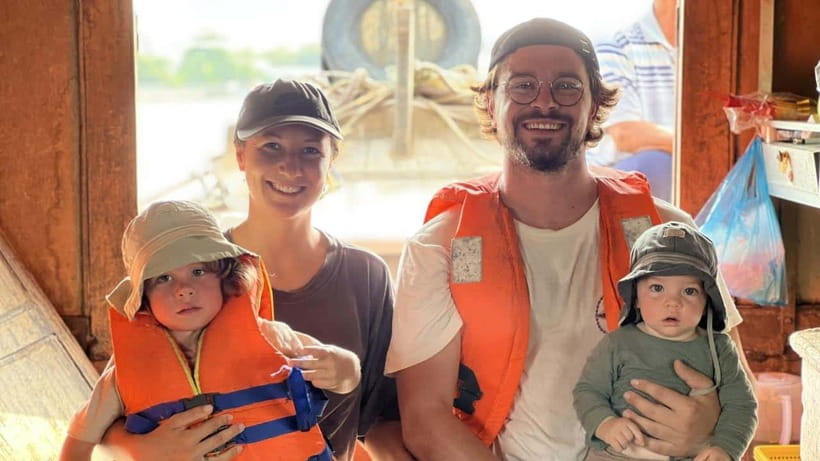
The day begins with a ride toward Cần Thơ, then you reach the Mekong for a short sunrise cruising segment. It’s not long, but it’s timed for that first light when the river feels open and quiet.
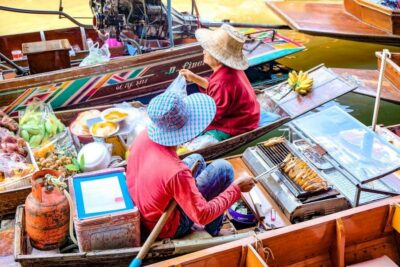
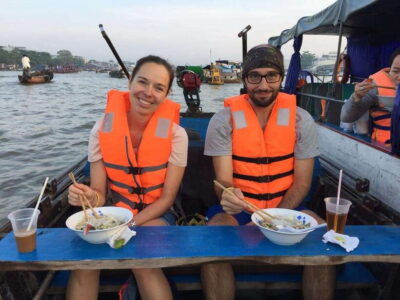
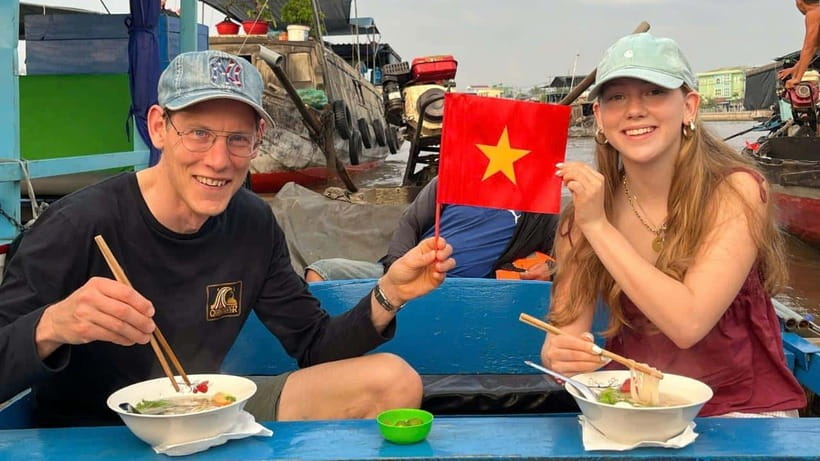
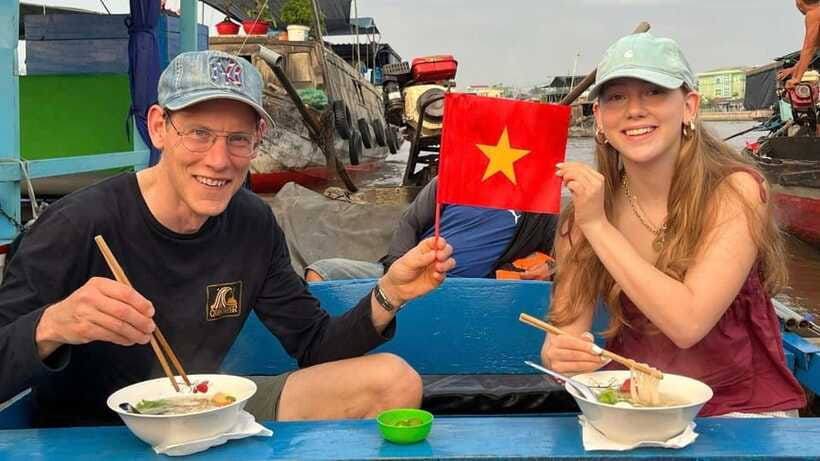
When you arrive at the market, the breakfast is part of the experience, not a side note. You’ll have a meal prepared by a local vendor right at the floating market, with vegetarian options available. That matters because it keeps the experience grounded in what people actually eat and buy early in the morning.
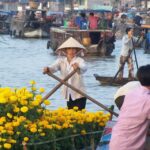
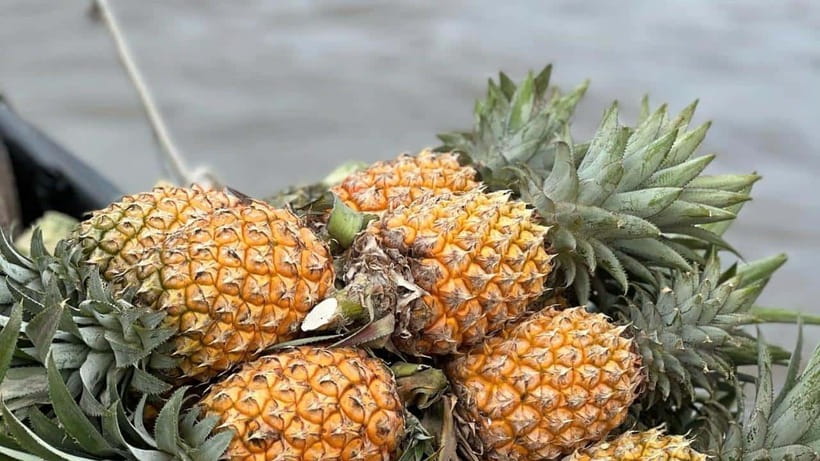
Then comes a fun extra: you stop by a pineapple boat where you can taste fresh, juicy fruit and chat with vendors about river life. It’s a small moment, but it gives you context fast—this market runs on regular relationships, not just transactions.
On-the-water walking: how you move through the market
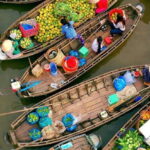
You’ll spend time at Cái Răng with photo stops and guided sightseeing. Getting around is done by small boat (a sampan), which keeps you close to the action without forcing you to fight through crowds on land.
There’s one trade-off. Boat movement and tight spaces mean you’ll want comfortable shoes and a steady sense of balance, especially when you shift between dock edges and small boats. If you’re sensitive to motion, this is something to plan around.
The upside is that you see the market from the water level—where you notice how items are arranged on boats and how vendors work. It’s the kind of access that makes your photos look like you were really there, because you were.
Traditional rice noodle making at a family Lò hủ tiếu house

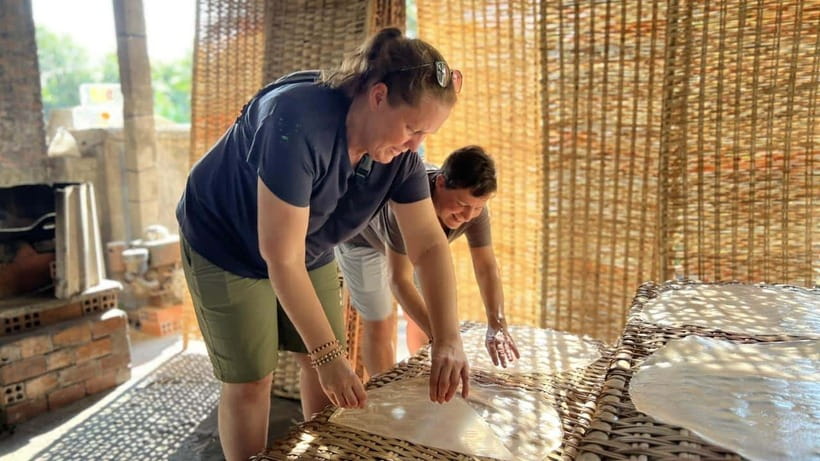
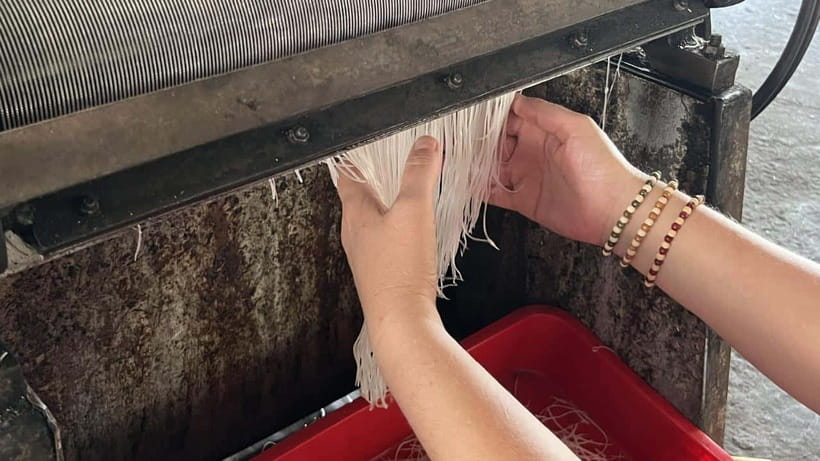
This is one of the most meaningful parts of the trip because it’s not a performance. You visit a family-run rice noodle house (Lò hủ tiếu Chín Của), then you can try making your own noodles and learn the traditional techniques.
What makes it valuable for you is the contrast with most food tours. Here, you’re not just watching someone cook for tourists in a shop window. You’re seeing how the process works as a craft, with generations of knowledge shaping simple steps that take time and practice.
If you get a guide like Edward, you’ll likely appreciate the extra explanation. In past experiences, guides like him have been praised for staying prepared, answering questions, and making the food steps easier to understand while you’re doing them.



Gliding into smaller canals by paddle
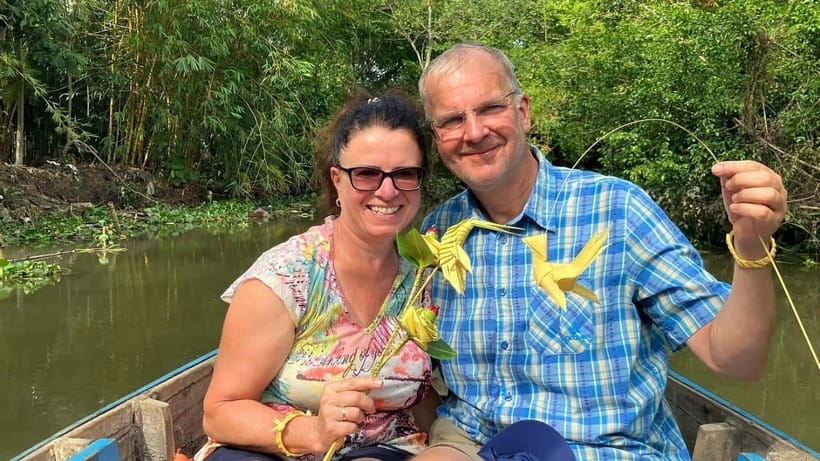
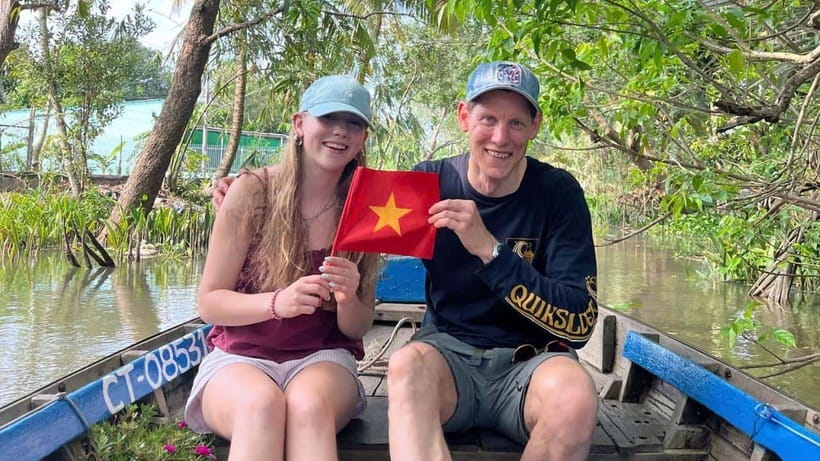
After the market and noodle stop, you shift from busy river activity to quieter water. You’ll head into smaller canals where you travel by paddle, listening to nature and looking for water palms and coconut trees.
This part is about pace. The canals give you space to notice details—sounds, small movements, the way houses and gardens sit close to the water. It’s also a good reset after the sensory intensity of the market.
One practical note: there’s still some movement involved, including short walks between stops. Bring a hat and water, and wear clothes you don’t mind getting a little dusty or damp.
Village walk: seeing daily life without the show
At around 9:00 a.m., you’ll take a short village walk. This is designed for a glimpse of everyday life and traditional homes, with time for simple interactions that add context to what you saw on the river.
This stop can feel more personal than it looks on a schedule. When you’re already awake and moving slowly on foot, you tend to notice how people live with the river nearby—storage, paths, and the way daily routines connect back to water.
If you’re hoping for big museum-style explanations, you might find it lighter than that. But the trade-off is more honest observation and less staged storytelling.
Cacao farm visit and the real taste of cacao milk
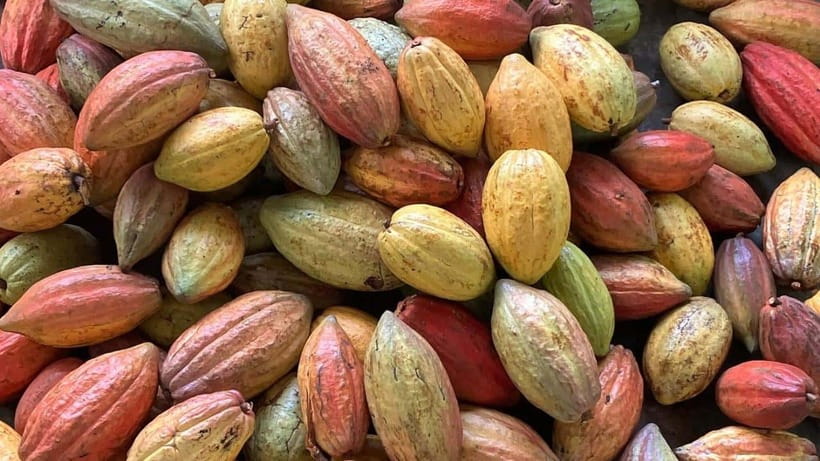
Then comes the chocolate part, but it’s grounded. You walk to a cacao plantation where an artisan explains how cacao is cultivated and crafted using traditional family methods.
You’ll taste a fresh glass of cacao milk, which is a direct way to connect the plant to the drink. It’s also a helpful reality check: chocolate isn’t just a candy bar; it starts with processing decisions that shape flavor.
This stop also ties back to the community theme. The tour is built so your visits support local businesses, and you can see project involvement at different stops. That makes the tasting feel earned instead of just purchased.
Timing, tides, and why the day can run a bit flexible
The itinerary is tight, but nature still has its say. The tour may end earlier or later based on tide conditions, and the operator flags that you might not finish at an exact minute.
Expect a long day overall. You usually return toward Ho Chi Minh City in the early afternoon, with the schedule listing an arrival around 2:30–3:00 p.m. You’ll be back with enough time to recover, but this isn’t the kind of excursion you can stack with another tour later the same day.
Price and value: what $85 really buys you
At about $85 per person, the biggest question is whether it feels worth the early wake-up. For me, the value comes from the mix of transport + multiple included experiences.
You’re paying for:
- A round-trip day plan starting from Ho Chi Minh City at 2:30 a.m.
- Transport plus boat time (including sampan and a boat driver)
- Breakfast with vegetarian-friendly options, plus fresh fruit and drinks
- Entrance fees tied to the key stops (floating market, noodle house, cacao farm, village walk)
- A guided experience in English (and French is possible with an extra fee)
If you were to piece this together independently, you’d likely lose time coordinating transport and boat logistics, and you’d probably skip the deeper food and craft parts. The noodle house + cacao farm combination is also a rarer pairing than the standard floating market only.
That said, $85 can feel steep if you’re only chasing market photos. If your goal is river life and food crafts you can understand, the price makes more sense.
Who should book this tour—and who should skip it
This trip fits best if you want a working-river experience. You’ll like it if you enjoy early starts, boats, food you can learn hands-on, and a tour that focuses on local people and crafts.
It might not fit if you have physical limitations. The tour is marked as not suitable for pregnant women, people with back problems, wheelchair users, and anyone who struggles with walking and boat transfers.
If you hate early mornings, consider the reality check: this one asks for sunrise-level commitment. But if you’re the type who enjoys being awake while others sleep, you’ll probably feel like you got the better part of the day.
What to bring so the morning stays pleasant
The checklist is simple, and it matters at 2:30 a.m. and on the river:
- Comfortable shoes for short walks and boat transfers
- Hat and water, since you’ll be outdoors early
- A waterproof camera (or protection for your phone)
- Comfortable clothes you won’t stress about if they get a little dusty
Also, keep a light layer handy. Morning air can feel cool on the water even in southern Vietnam.
FAQ
What time is the pickup from Ho Chi Minh City?
Pickup starts at 2:30 a.m. This is early enough to enjoy a sunrise on the Mekong River.
How do I get there if I choose the bus option?
You can take a taxi to the bus station yourself, and the tour staff will assist you step by step.
Is the breakfast vegetarian-friendly?
Yes. Breakfast is vege-friendly, and vegetarian options are available.
What parts of the trip are on boats?
You’ll do a cruise on the Mekong River for sunrise, visit Cái Răng by small boat, and travel by boat between stops (including another boat cruise later).
What food experiences are included besides the floating market breakfast?
You’ll also visit a family rice noodle house (Lò hủ tiếu Chín Của) to learn traditional noodle making, and you’ll visit a cacao farm with a glass of cacao milk.
Is the tour suitable for wheelchair users or back problems?
No. It is marked as not suitable for wheelchair users and people with back problems (and also not suitable for pregnant women).
How long is the tour?
Duration is approximately 12 hours, and it may end earlier or later due to tide conditions.
Can I request a French-speaking guide?
Yes, a French-speaking guide is available for an extra fee of $8.
Should you book this Cai Rang floating market boat trip?
If your goal is more than a quick market stop, I’d book it. The best reason is the combination: sunrise river time, breakfast with local vendors, a family rice noodle session, quieter canal paddling, and cacao with a real taste of what the plant becomes.
If you dislike very early mornings, or if boat transfers and short walks are hard for your body, you should skip it. For everyone else, this is one of those rare days where the river isn’t just scenery—it’s the setting for food craft and daily life.