REVIEW · BANGKOK
Bangkok’s Best: City Highlights & Floating Market Private Tour
Book on Viator →Operated by roamHerTravel · Bookable on Viator
Big days in Bangkok are a mix of heat, crowds, and complicated logistics. This private tour hits the city’s top temples first, then adds two legendary markets and a longtail boat ride so you get the real rhythms of Thailand in one shot.
I especially like the private pace. You’re not stuck weaving through lines with strangers, and the plan keeps moving from one major site to the next without feeling rushed. I also like that everything big is bundled in, including hotel pickup/drop-off and entrance tickets.
One thing to consider: this is not a great fit for mobility limitations. You’ll be on your feet and moving between areas throughout the day, and you should expect some uneven ground around temples and markets.
In This Review
- Key takeaways before you go
- Grand Palace and Wat Phra Kaew: starting with Bangkok’s most iconic wow
- Wat Pho and Wat Arun: gold leaf, the Reclining Buddha, and river skyline views
- The Kuan Yim Shrine stop: a calm pocket in a full day
- Maeklong Railway Market (Hoop Rom Market): commerce that makes room for the train
- Yaowarat Chinatown: where to snack and shop with a plan
- Salt Lake De Maeklong: seeing an industry, not just a postcard
- Damnoen Saduak Floating Market by longtail boat: the view changes when you’re on the water
- Price and what $285.43 per person buys in real-world convenience
- Who should book this private Bangkok day (and who should skip it)
- Should you book Bangkok’s Best: City Highlights & Floating Market Private Tour?
- FAQ
- FAQ
- How long is the Bangkok private highlights and floating market tour?
- Is hotel pickup and drop-off included?
- Are entrance tickets included for the temples?
- Does the tour include boat rides?
- Is this tour private or shared with other groups?
- Is the tour recommended for travelers with mobility impairment?
Key takeaways before you go
- Private guide + private vehicle keeps the day efficient and flexible
- Longtail boat time means you’ll actually see the floating market canals from the water
- All major entrances included covers Grand Palace, Wat Phra Kaew, Wat Pho, and Wat Arun
- Maeklong Railway Market adds a rare, you-might-miss-it local moment
- Chinatown (Yaowarat) stop gives you time to snack and browse streets, not just stare at landmarks
Grand Palace and Wat Phra Kaew: starting with Bangkok’s most iconic wow
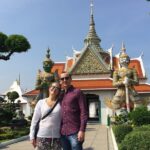
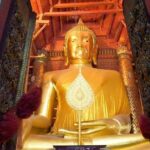
The day starts strong with the Grand Palace, and that’s the right call. This is one of those places where your brain goes, wait—this is all gold and detail, and somehow it’s still organized. You get around 40 minutes here, with admission included, which is enough time to take in the scale without turning it into a blur.
Next comes Temple of the Emerald Buddha (Wat Phra Kaew). This is where craftsmanship turns into focus: Thai architecture, temple ornaments, and the Emerald Buddha itself carved from a single jade stone. You get about 30 minutes, which is a fair window because you’ll want moments to look, not just walk past. If you’re the type who likes to read details instead of speed-running photos, this pacing will feel comfortable.
Practical tip: dress for temple rules—shoulders and knees covered—then keep a light layer handy. Bangkok weather can be forgiving until it suddenly isn’t, and you’ll be outside for these opening stops.
You can also read our reviews of more tours and experiences in Bangkok.
Wat Pho and Wat Arun: gold leaf, the Reclining Buddha, and river skyline views
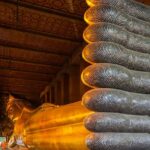
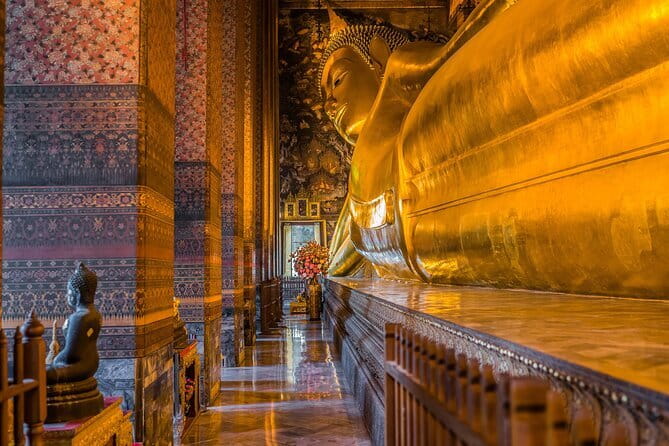
After two temple stops that feel like pure spectacle, Wat Pho shifts the mood. You’ll spend around 1 hour at Wat Pho, home to the Reclining Buddha (46 meters, adorned with gold leaf). It’s one of Bangkok’s most famous images, but seeing it in person has a different effect than scrolling past pictures. The size lands first, then the gold-and-detail work starts to make sense as you slow down.
Wat Pho also matters because it’s connected to traditional Thai massage. You don’t need to book anything to benefit from the atmosphere; it’s enough to recognize the temple isn’t just a monument—it’s part of lived tradition.
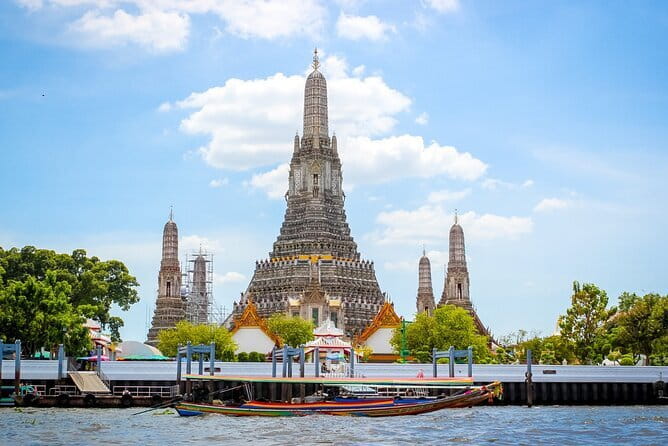
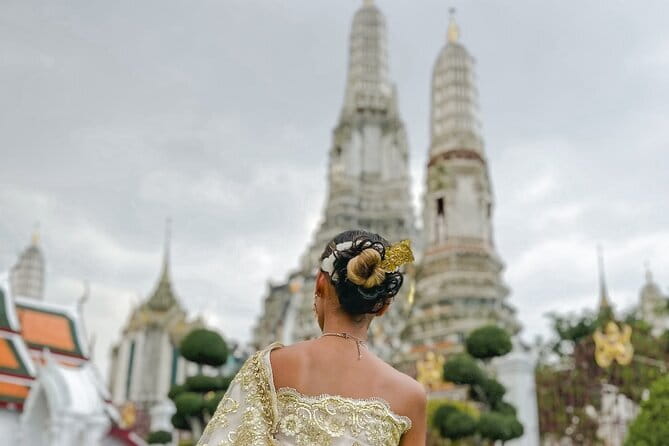
Then you cross the Chao Phraya River by boat to Wat Arun (Temple of Dawn). Plan on about 1 hour here, including the admission. Wat Arun is known for its intricate design, and the river crossing is part of the experience, not just transportation. You’ll get that classic city-and-water perspective that makes these temples feel tied to Bangkok’s geography.
What to watch for: Wat Arun is all about angles and textures. If you’re tall or you prefer wide views, you’ll want to find spots where you can see the temple details and not just the backs of people. Your guide can help you pick a line that makes sense.
The Kuan Yim Shrine stop: a calm pocket in a full day
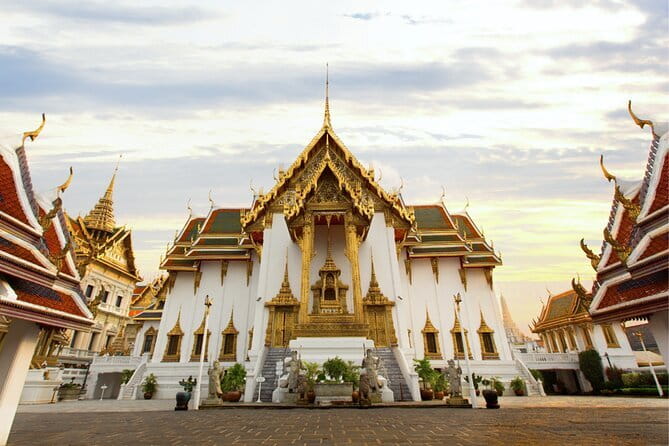
Not every stop on this plan is a headline landmark, and that’s a good thing. The tour includes Kuan Yim Shrine (Thian Fa Foundation) for about 30 minutes, and it’s free to visit.
This is dedicated to the goddess of mercy and compassion, which translates on the ground to a quieter, more reflective feeling than the big temple crowds. If the morning is about scale and golden detail, this stop gives you a moment to slow down and reset your brain before you head into markets.
Even if you’re not religious, you’ll probably appreciate the contrast. Bangkok has layers, and this is one of the gentler layers.
Maeklong Railway Market (Hoop Rom Market): commerce that makes room for the train
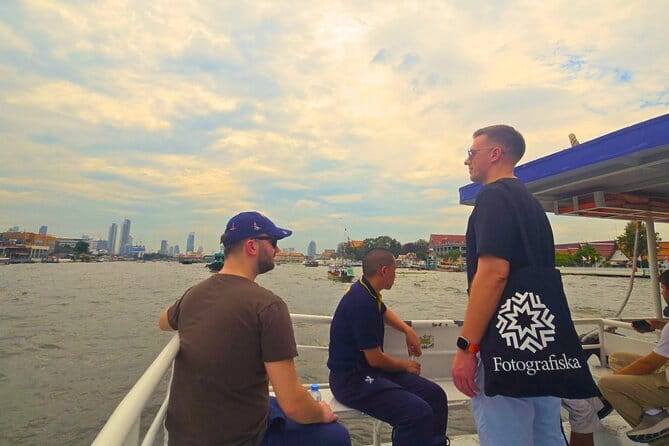
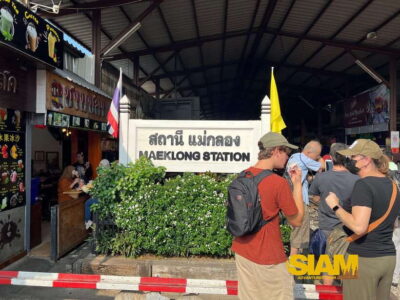
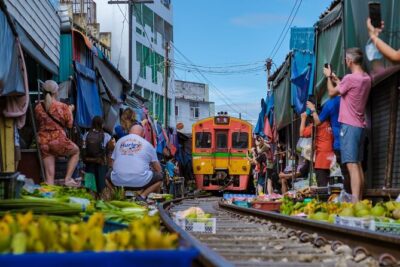
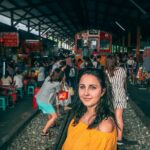
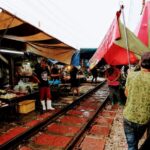
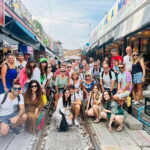
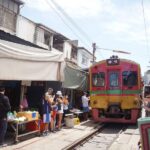
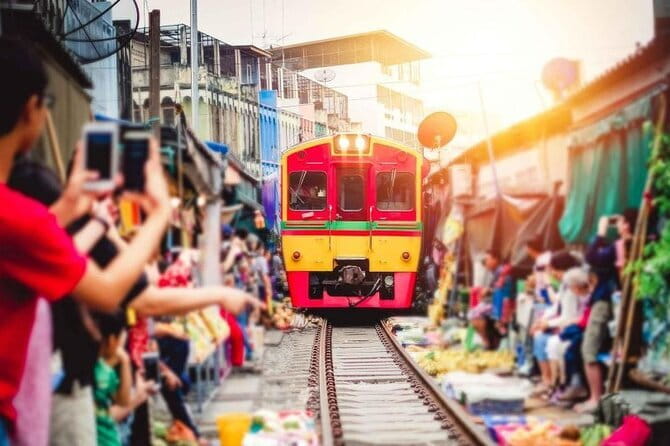
Next up is Maeklong Railway Market, also called Hoop Rom Market. You get about 2 hours here, and it’s free to enter. This is one of those everyday-life situations that feels unreal until you’re watching it happen.
The core idea is simple: vendors set up their goods right along the railway. When a train comes, the stalls are cleared quickly so the train can pass, then commerce returns. That rhythm—ordinary business suddenly making space—is exactly what makes this stop worth building into a full-day itinerary.
How to get more out of it: stand where you can see both the stalls and the track line, and give yourself a little time before the train arrives. You want to watch the setup and the clearing, not just one quick moment.
Yaowarat Chinatown: where to snack and shop with a plan
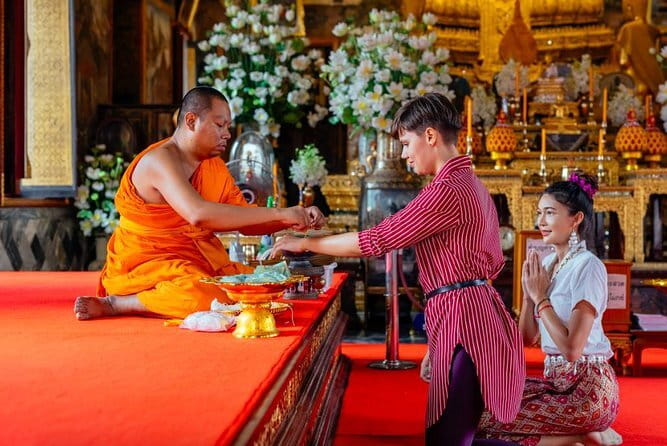
After temples and markets, the tour continues to Chinatown, specifically Yaowarat Street. You’ll have about 30 minutes here, and it’s free.
This is a short stop on purpose. Chinatown can swallow an itinerary whole if you let it. With a guide and a schedule, you can focus on the experience you want—street food energy, quick browsing, and soaking up the street scene—without losing the rest of the day.
Smart approach: treat this as a “sampler” moment. Pick one or two things you truly want to eat, then walk a few blocks. If you try to do everything, you’ll end up spending your time deciding.


Salt Lake De Maeklong: seeing an industry, not just a postcard
One of the more surprising stops is Salt Lake De Maeklong (De Maeklong เดอ แม่กลอง), also listed as “คาเฟ่นาเกลือแห่งแรกของไทย,” for about 30 minutes. It’s free, and it’s here to show you a different side of the Maeklong area: traditional salt farming methods and the local industry behind them.
This isn’t about temple design or market chaos. It’s about how people make a living and how an agricultural practice shows up in the landscape. Even if you don’t know anything about salt production, you’ll likely come away with a clearer idea of why salt matters historically and today.
What to expect: this is a shorter, observational stop. Wear shoes you trust, since market and outdoor areas can get dusty or uneven.
Damnoen Saduak Floating Market by longtail boat: the view changes when you’re on the water
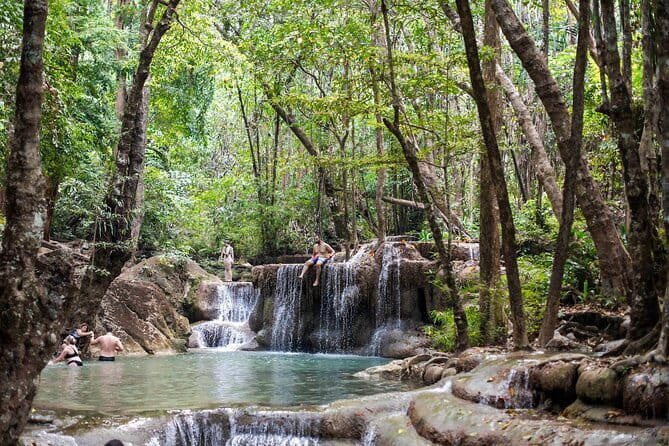
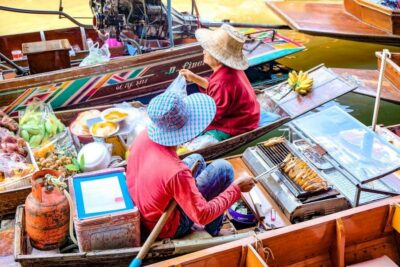
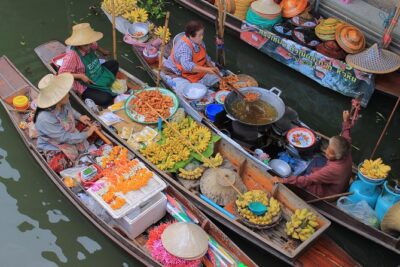
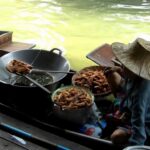
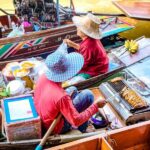
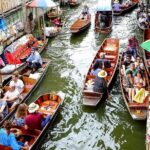
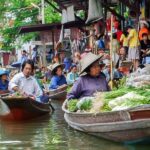
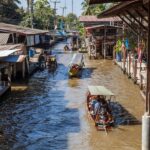
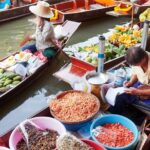
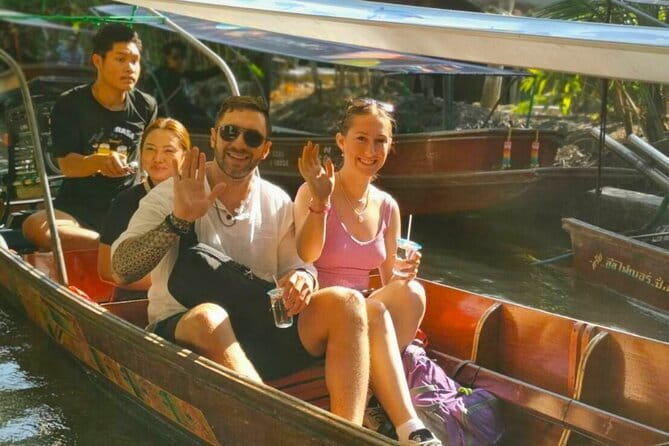
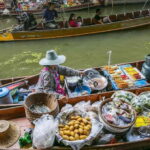
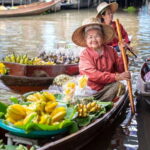
The finale is Damnoen Saduak Floating Market, with about 2 hours there. It’s free to enter, but the bigger value is the time on the water: a private long-tail boat ride.
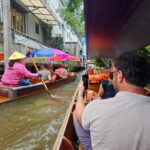
Riding a longtail boat through the canal network is the point. You see boats passing at different distances, you get a better sense of how the market moves, and the whole scene stops feeling like a destination and starts feeling like daily life.
This is also where the private setup pays off. With your own guide and your own boat ride, you spend less time negotiating logistics and more time actually enjoying what you traveled for.
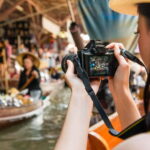
A reality check: floating markets are active, and sights come quickly. If you want photos, plan to take them while the boat is moving slowly enough to frame what’s in front of you.
Price and what $285.43 per person buys in real-world convenience
At $285.43 per person for about 10 hours, this isn’t a budget day. But it does line up with what you’re buying: private transport, a professional guide, hotel pickup and drop-off, private longtail boat time, and entrance tickets for the main temples.
A common Bangkok problem is that “cheap” tours often charge extra for key sites, and then you end up paying more anyway once you factor in transport, admission, and river crossings. Here, the big-ticket entrances are included, and the plan is structured so you’re not constantly changing plans on the fly.
So for me, the value comes from two places:
1) You’re compressing a lot of major stops into one guided day.
2) You’re buying time and reducing stress, especially with boat travel and temple admissions handled for you.
If you’re traveling as a couple or small group, private tours often make more sense because costs can be more predictable than piecing everything together yourself.
Who should book this private Bangkok day (and who should skip it)
This tour fits best if you want a serious highlights pass without turning your trip into a scramble. You’ll likely enjoy it if you care about temples, like history lessons, and want the full contrast of Bangkok plus Maeklong markets and a floating market day.
It’s also a good fit if you value convenience:
- hotel pickup/drop-off
- private transportation
- entrance tickets covered
- a guide who can explain what you’re looking at, not just point and move on
Skip it if you need a highly accessible route. The tour explicitly isn’t recommended for travelers with mobility impairment, and temple and market areas can involve walking and uneven surfaces. Also, if you hate boat rides or prefer very slow sightseeing, you might find the schedule full. The plan is designed for seeing a lot in one day.
Should you book Bangkok’s Best: City Highlights & Floating Market Private Tour?
If your goal is to see Bangkok’s biggest temple icons plus two standout market experiences, this is a strong way to do it. The private format means you spend more time watching and learning and less time figuring out timing. The most praised parts are the guide quality—especially the history lessons and attention—and that matters on a day like this, where context turns impressive sights into memorable ones.
Book it if:
- you want temples first, then markets, without juggling tickets and transport
- you’re comfortable with a full day and some walking
- you want the floating market experience from the water
Hold off if:
- you need step-free, highly accessible routing
- you prefer a very light pace or fewer stops
- you only want one neighborhood or one kind of attraction
FAQ
FAQ
How long is the Bangkok private highlights and floating market tour?
It runs about 10 hours.
Is hotel pickup and drop-off included?
Yes. Hotel pickup and drop-off are included.
Are entrance tickets included for the temples?
Yes. Entrance tickets are included for the Grand Palace, Wat Phra Kaew (Emerald Buddha), Wat Pho, and Wat Arun.
Does the tour include boat rides?
Yes. You’ll cross the river by boat to Wat Arun, and you’ll also take a private long-tail boat ride for the Damnoen Saduak Floating Market.
Is this tour private or shared with other groups?
It’s private. Only your group participates.
Is the tour recommended for travelers with mobility impairment?
It is not recommended for travelers with mobility impairment.
If you tell me your travel month and whether you’re a temple-lover or more of a market-and-food person, I can suggest how to time your day for fewer crowds and smoother photo stops.